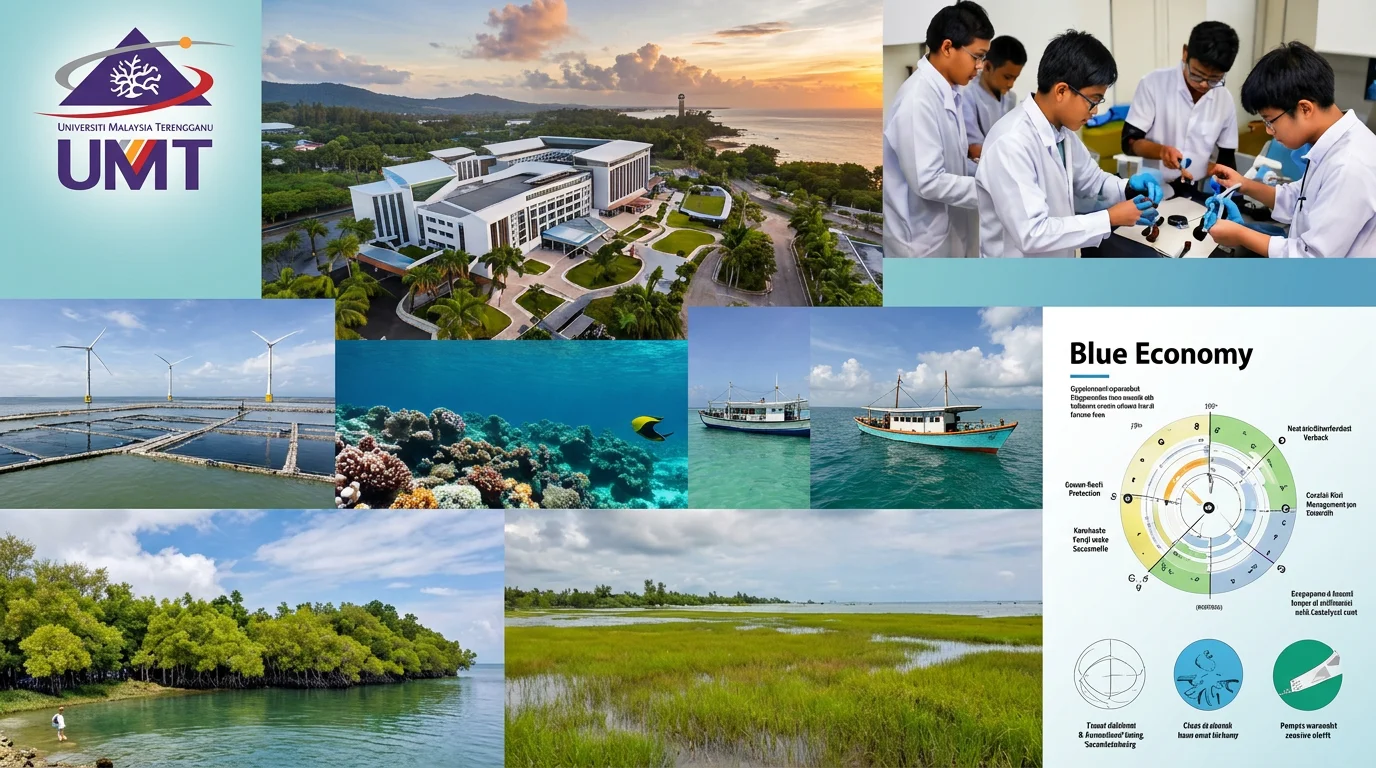
At a quiet fishing village along Terengganu’s coast, UMT researchers meet with local fishermen, sketching sustainable aquaculture designs over weathered tables. Inside a lab, beneath the hum of air-conditioning and the glow of lights, UMT scientists examine coral fragments and monitor aquaculture tanks, translating lab data into real-world solutions. From UMT’s coastal campus, drones lift off, while researchers deploy underwater sensors to map the seabed.
From its origins in 1979 as a small marine training centre, UMT has now evolved into a leading ocean institution, tackling fisheries, maritime studies, coastal engineering, and blue innovation, combining its cutting-edge technology with multidisciplinary expertise. Through its comprehensive approach to ocean science and innovation, the marine-focused university is presently helping shape the direction in which Malaysia and the region will navigate the Blue Economy.
Shift toward Sustainable Ocean Development
Across the Asia Pacific, coastal nations are navigating a convergence of pressures: rising demand for marine resources, growing climate-related vulnerabilities, rapid technological shifts transforming traditional ocean industries, and the urgent need to modernise these sectors without compromising the ecological integrity of marine ecosystems.
In other words, the global and regional priorities have shifted toward sustainable ocean development. At the same time, countries must strengthen governance capacity, close financing gaps, and ensure that new blue innovations are adopted responsibly and equitably. Together, these forces create both an unprecedented challenge and a unique opportunity for the region to chart a more resilient, knowledge-driven, and sustainable ocean economy.
For Malaysia, the ocean has always been more than a horizon. It has shaped our history, supported our livelihoods, and anchored our identity as a maritime nation. For over four decades, Universiti Malaysia Terengganu (UMT) has carried this spirit forward, steadily building the scientific, educational, and governance foundations that today place the university at the heart of Malaysia’s Blue Economy aspirations.
UMT’s readiness for this has been decades in the making. The university’s beginnings in 1979 as a marine-focused research and training centre laid the groundwork for what would later become a comprehensive ocean institution. Over the years, UMT has expanded its capabilities across oceanography, fisheries, aquaculture, marine biology, coastal engineering, maritime studies, seabed mapping, environmental governance, and blue innovation. This breadth allows UMT to approach the Blue Economy holistically, bridging the natural and social sciences and industry perspectives.
UMT’s real strength, however, lies in its ability to connect scientific knowledge with national needs. Its research informs coastal management, marine spatial planning, biodiversity protection, maritime safety, and blue technology development. The university’s long-standing engagement with policymakers, government agencies, industry players, and coastal communities ensures that ocean knowledge does not remain confined to academic spaces but actively shapes decision-making processes.
UMT Beacon
UMT has set up the Blue Economy Centre, or UMT Beacon, to act as a regional hub for excellence in the Blue Economy. This flagship initiative focuses on marine-related research, innovation, and education to promote sustainable ocean development and serves as a key driver for UMT’s knowledge transfer programmes and industry collaboration.
UMT Beacon aims to develop the blue economy by connecting UMT with the stakeholders from various industries, such as fisheries, aquaculture, tourism, and energy, to help translate research into tangible benefits and solutions for the community and the nation.
In terms of research and innovation, UMT Beacon helps spearhead UMT’s involvement in initiatives related to marine science and the blue economy. For knowledge transfer, the centre serves as a facilitator for knowledge transfer programmes between UMT and external parties. As far as collaboration is concerned, it fosters partnerships with national and international institutions, businesses, and government agencies. Regarding education, this regional hub supports educational programmes and provides training on various subject matters. One example is capital market education, offered through its partnership with the Malaysian Association of Technical Analysts (MATA).
Why WBEF Matters to Malaysia and the Region
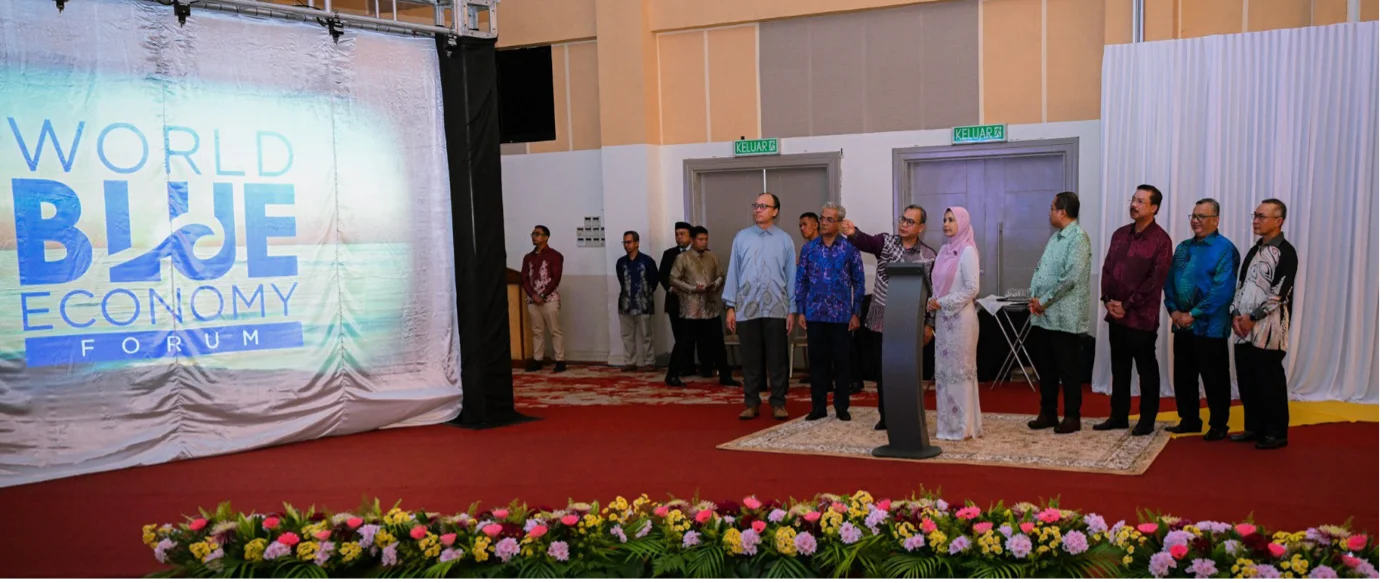
At a time when countries around the world are reassessing how they use and protect the ocean, UMT Beacon will be organizing a timely, strategic, and forward-looking event. The Sultan Mizan World Blue Economy Forum (WBEF) 2026, will be held from 9–11 September 2026 in Kuala Lumpur.
This forum will bring together leaders in ocean governance, marine industries, coastal development, blue finance, and conservation, signalling Malaysia’s readiness to contribute meaningfully to the evolving global narrative on ocean futures. For the nation, the forum provides an opportunity to articulate a clear vision for sustainable ocean growth, deepen regional cooperation, and showcase national strengths in marine science and innovation.
The forum’s thematic pillars mirror the areas in which Malaysia has both potential and priority, which include:
- Smart ports and blue transport
- Fisheries advancement and sustainable aquaculture
- Marine biotechnology and blue bioeconomy
- Ocean renewable energy
- Marine conservation and ecosystem resilience
- Emerging blue technologies and innovation
These themes are not abstract; they are tied to national goals in climate resilience, food security, maritime competitiveness, and coastal community well-being. For UMT, WBEF is an opportunity to demonstrate its long-standing expertise and elevate Malaysian scientific contributions onto an international stage. Students, researchers, and partners will gain access to global networks, collaborative opportunities, and new avenues for research translation and technology adoption.
From Local Knowledge to Global Conversations
One of UMT’s defining characteristics is that its work is grounded in real landscapes: mangrove creeks, coral reef systems, offshore platforms, coastal villages, and deep-sea environments. The knowledge generated in these diverse settings enables UMT to contribute insights that are deeply empirical and regionally relevant.
WBEF transforms these field-based perspectives into part of a larger, global conversation. As the world moves toward integrated, evidence-based ocean governance, Malaysia’s experience, shaped by decades of UMT’s research and community engagement, becomes highly valuable. With its track record and multidisciplinary depth, the university is well-positioned to help frame discussions on blue finance, innovation ecosystems, climate adaptation, and sustainable marine industries.
The significance of WBEF extends beyond the two days of dialogue. It marks a shift in how Malaysia positions itself for the future of ocean sustainability, toward an assertive, collaborative, and knowledge-driven approach. It also signals the responsibility carried by institutions like UMT to continue shaping the national and regional agenda for decades to come.
UMT’s journey in ocean science and governance has always been about more than research. It has been about service: to communities, to the nation, and to the ocean that sustains us. As WBEF approaches, UMT’s role becomes clearer than ever. It is not simply participating in the forum; it is helping shape the direction in which Malaysia and the region will navigate the Blue Economy.
The ocean has long been part of Malaysia’s story. Now, it is part of our strategy, and UMT continues to guide the way forward.
For more information and expression of interest, please contact razak@wbeforum.com or visit www.wbeforum.com
Author: Dr. Khaira Ismail, UMT Blue Economy Advancement Centre (BEACON)
 Universiti Malaysia Terengganu (UMT)